
Kojic acid: the science, application, and future development of natural whitening gold
What Is Kojic Acid? A Scientific Overview
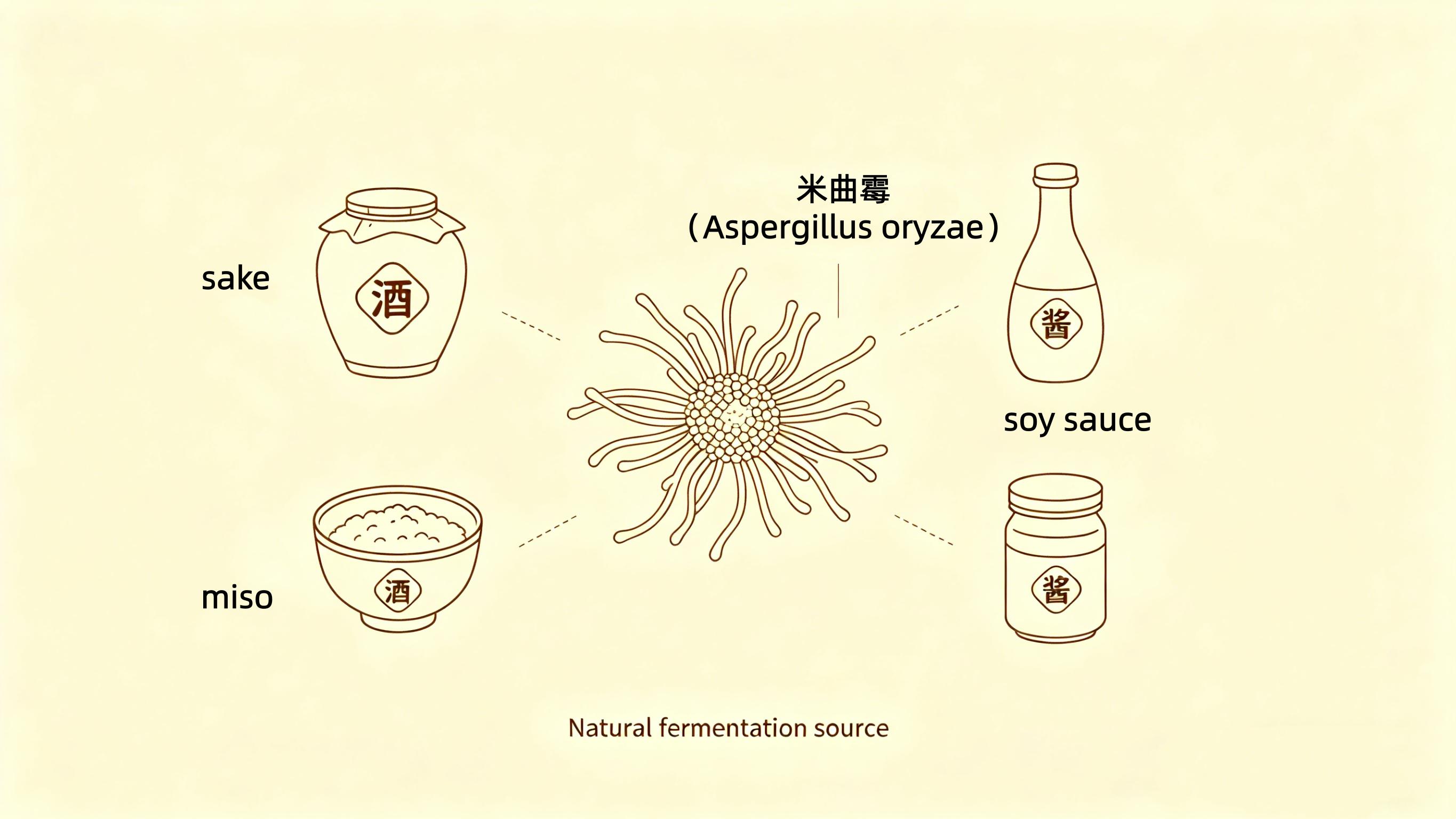
Kojic acid, chemically known as 5-hydroxy-2-(hydroxymethyl)-4-pyrone (CAS number: 501-30-4), is a naturally occurring organic compound produced by the fermentation of carbohydrates by various fungi, most notably Aspergillus oryzae — the same fungus used in Japanese sake, miso, and soy sauce production. First discovered in 1924 by Japanese chemist T. Yabuta, who identified its structure as a γ-pyrone derivative, kojic acid has evolved from a byproduct of traditional fermentation to a multifunctional ingredient with applications across cosmetics, food, pharmaceuticals, and industry.
Key physical and chemical properties of kojic acid include a white to off-white crystalline powder appearance, solubility in water and alcohol, a molecular weight of 142.11 g/mol, and stability in pH ranges between 4.0 and 7.0. Its unique molecular structure endows it with two core functional properties: strong tyrosinase inhibition (critical for skin lightening) and excellent metal ion chelating ability (useful for preservation and industrial processes). Unlike synthetic skin-lightening agents, kojic acid is derived from natural fermentation, aligning with the global trend toward “clean, green” ingredients in consumer products.
Frequently Asked Questions (FAQs) About Kojic Acid
Google searches for kojic acid are dominated by practical questions from consumers and industry professionals. Below are the most common queries, answered with scientific evidence and research support:
- How Does Kojic Acid Work for Skin Lightening?
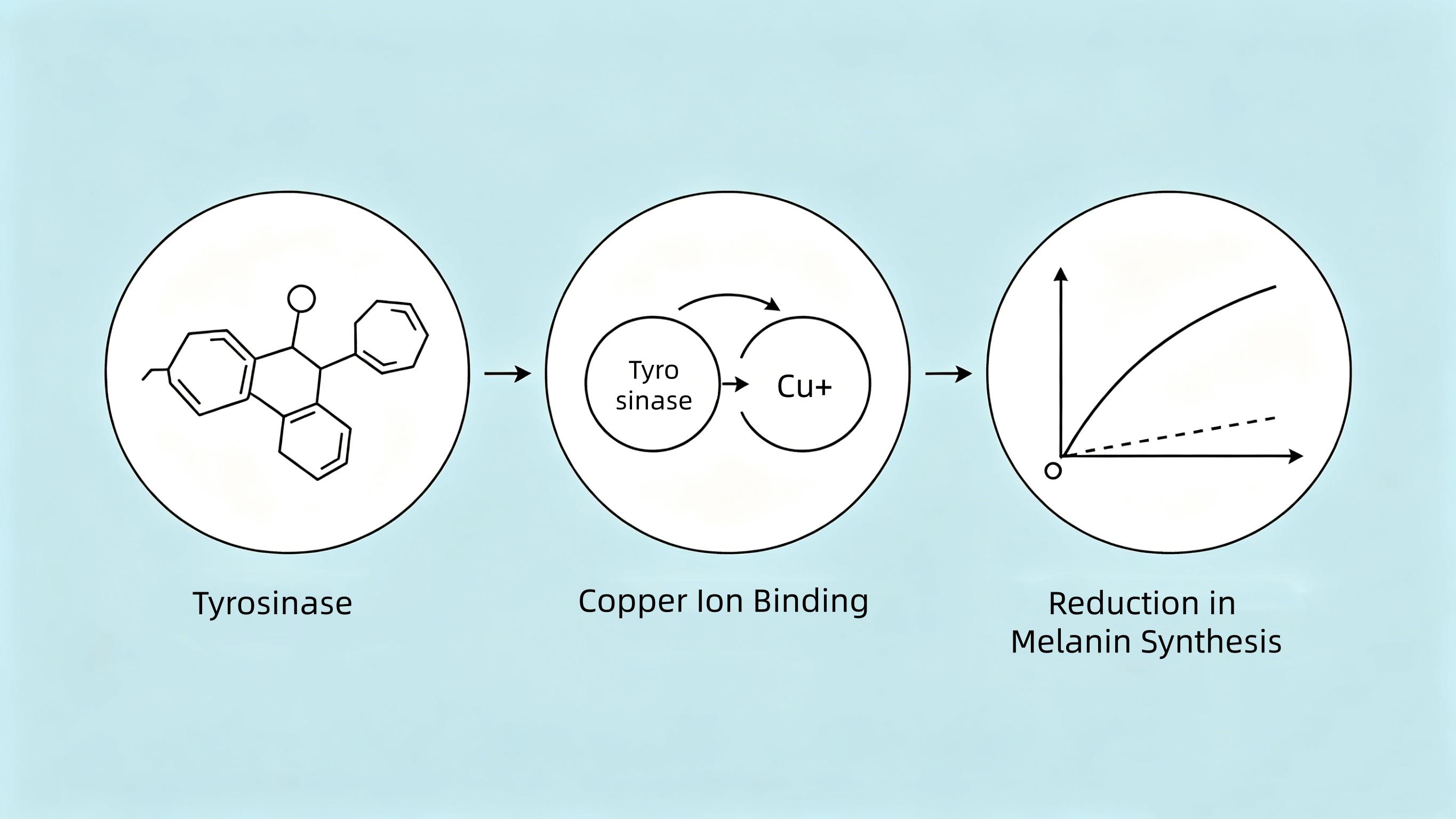
Kojic acid’s primary role in Skin care is as a tyrosinase inhibitor — a compound that blocks the activity of tyrosinase, the enzyme responsible for catalyzing melanin production in the skin. Melanin is the pigment that gives skin its color, and overproduction can lead to hyperpigmentation, dark spots, melasma, and uneven skin tone.Kojic acid binds to the copper ions in tyrosinase, reducing its activity and slowing down melanin synthesis at the source. Additionally, it acts as an antioxidant, reducing oxidative stress that contributes to skin damage and pigmentation issues.
A 2006 study published in Phytotherapy Research confirmed that kojic acid is an effective depigmenting agent, with significant results in reducing hyperpigmentation when used topically over 8–12 weeks. Another 2022 review in Cosmetics noted that kojic acid’s tyrosinase inhibition is comparable to other popular skin-lightening ingredients, but with a lower risk of irritation for most users when formulated correctly.
- Is Kojic Acid Safe for Use?
The safety of kojic acid has been extensively studied, and it is generally considered safe for topical and food use when used within recommended concentrations. A 2010 safety assessment published on ResearchGate concluded that kojic acid is non-carcinogenic, non-mutagenic, and well-tolerated by most individuals at concentrations of 1–4% in cosmetic products. However, high concentrations (above 5%) may cause mild skin irritation, redness, or dryness, particularly in individuals with sensitive skin or those using other exfoliating ingredients (e.g., retinol, AHAs).
Regulatory bodies worldwide have approved kojic acid for use: the U.S. FDA classifies it as a safe cosmetic ingredient, the EU includes it in its list of allowed substances, and the FAO has recognized its safety as a food additive. It is important to note that pregnant or breastfeeding individuals should consult a dermatologist before using kojic acid products, as limited studies exist on its effects in these populations.
- What Are the Main Applications of Kojic Acid Beyond Cosmetics?
While kojic acid is most famous for its skin-lightening properties, its versatility extends to three core industries:
- Food Industry: As a natural food additive, kojic acid acts as an antioxidant and anti-browning agent. It chelates copper ions to inhibit polyphenol oxidase, preventing the browning of fresh-cut fruits (e.g., apples, potatoes) and vegetables during storage. It also has mild antimicrobial properties, extending the shelf life of seafood, jams, beverages, and baked goods.
- Pharmaceuticals: Kojic acid serves as an intermediate in the synthesis of specific antibiotics and drugs. Recent research has also uncovered its neuroprotective potential: a 2025 study in the Iranian Journal of Basic Medical Sciencesfound that both kojic acid and its nanostructured lipid carriers (NKA) reduced oxidative stress and inflammation in a rat model of brain ischemia, with NKA showing improved neurobehavioral outcomes. It also exhibits anticancer, antifungal, and anti-inflammatory properties, making it a promising scaffold for drug development.
- Industrial Sector: Its metal-chelating properties make it useful in industrial processes, such as water treatment and metal cleaning, where it binds to heavy metal ions to prevent corrosion and contamination.
- What Are the Advantages of Kojic Acid Compared to Other Skin-Lightening Ingredients?
Kojic acid offers several key advantages over synthetic alternatives (e.g., hydroquinone) and other natural ingredients (e.g., arbutin, vitamin C):
- Natural Origin: Derived from fermentation, it appeals to consumers seeking clean, plant-based skincare options, unlike synthetic ingredients that may have harsh side effects.
- Gentle Efficacy: It is less irritating than hydroquinone (which can cause skin peeling and sensitivity) and works synergistically with other ingredients like vitamin C, niacinamide, and tranexamic acid to enhance brightening effects.
- Multifunctional: Beyond skin lightening, its antioxidant and antimicrobial properties provide additional skin benefits, such as protecting against free radical damage and preventing acne-causing bacteria growth.
Kojic Acid Market Development Trends (2026–2034)
The global kojic acid market is projected to grow steadily in the coming decade, driven by increasing consumer demand for natural skin-lightening products, expanding applications in food preservation, and advancements in formulation technology. According to a 2026 report by Fortune Business Insights, the market size is expected to grow from USD 54.4 million in 2026 to USD 71.68 million by 2034, with a compound annual growth rate (CAGR) of 3.5%.
Key Market Drivers
- Growing Demand for Skin-Lightening Solutions: Hyperpigmentation is a common skin concern, with dermatologists reporting that up to 40% of cosmetic consultations involve pigmentation-related issues, particularly among women aged 25–45. Kojic acid’s proven efficacy and natural origin make it a preferred ingredient in both premium and mass-market skincare products.
- Shift Toward Stabilized Derivatives: A major market trend is the adoption of stabilized kojic acid derivatives, such as kojic dipalmitate, kojic acid monoesters, and encapsulated kojic acid. These derivatives address the main limitation of pure kojic acid — its sensitivity to light, heat, and oxidation — by improving shelf life, skin compatibility, and formulation stability.
- Dominance of the Asia-Pacific Region: Asia-Pacific held the largest market share (54.67%) in 2025, driven by high demand for skin-lightening products in countries like Japan, South Korea, and China. The region’s strong fermentation industry (for sake and soy sauce) also provides a steady supply of natural kojic acid, supporting market growth.
- Expanding Applications in Food and Pharmaceuticals: The food industry’s increasing focus on natural preservatives and the pharmaceutical industry’s interest in kojic acid’s therapeutic potential (e.g., neuroprotection, anticancer) are opening new market opportunities beyond cosmetics.
Market Challenges and Opportunities
The main challenge facing the kojic acid market is the availability of alternative skin-lightening ingredients, such as tranexamic acid and bakuchiol, which compete for market share. However, opportunities lie in the development of novel formulations (e.g., nano-kojic acid) that enhance bioavailability and efficacy, as well as expanding into emerging markets in Latin America and Africa, where consumer demand for natural skincare is rising.
Key Research and Facts Supporting Kojic Acid’s Value
Numerous studies and reports have validated kojic acid’s efficacy, safety, and versatility:
- A 2019 study in Organic Synthesesdemonstrated a new method for synthesizing kojic acid derivatives, paving the way for more stable and effective formulations.
- A 2021 review in theAsian Journal of Allied Health Sciencessummarized kojic acid’s multifunctional properties, highlighting its potential in cosmetics, food, and pharmaceuticals as a natural, cost-effective ingredient.
- Google Trends data shows a 900% 5-year search growth for “kojic acid serum,” indicating rapidly increasing consumer awareness and demand for kojic acid-based skincare products.
- A 2011 study in Dalton Transactionsfound that kojic acid derivatives act as powerful chelators for iron (III) and aluminium (III), expanding their applications in industrial and pharmaceutical processes.
Additional Properties, Advantages, and Applications
To further complement the information above, here are additional key details about kojic acid:
Properties
Kojic acid has a melting point of 152–154°C, a boiling point of 350°C (decomposes), and a slight odor resembling caramel. It is non-toxic in low concentrations and biodegradable, making it environmentally friendly compared to synthetic alternatives. Its chelating ability also makes it useful in cosmetic formulations to prevent metal-induced oxidation of other ingredients.
Benefits
- Skin Health: In addition to lightening hyperpigmentation, kojic acid helps improve skin texture, reduce the appearance of fine lines, and protect against UV-induced damage due to its antioxidant properties.
- Food Safety: As a natural preservative, it reduces the need for synthetic preservatives (e.g., parabens), making food products healthier and more appealing to consumers.
- Therapeutic Potential: Recent research suggests kojic acid may have applications in treating Alzheimer’s disease, diabetes, and cancer, though more clinical trials are needed to confirm these benefits.
Applications
Beyond the core industries mentioned earlier, kojic acid is also used in:
- Agriculture: Its derivatives show potential in plant protection and growth regulation, helping to improve crop yield and resistance to pests.
- Cosmetics Beyond Skin Lightening: It is used in anti-aging products, acne treatments, and hair care products (to reduce scalp discoloration and dandruff).
- Textile Industry: As a dyeing auxiliary, it helps improve the color fastness of fabrics and prevent discoloration during washing.
References
1.Bentley, R. (2006). From miso, sake and shoyu to cosmetics: A century of science for kojic acid. Natural Product Reports, 23(6), 1046–1062. https://doi.org/10.1039/b603758p
2.Yabuta, T. (1924). The constitution of kojic acid, a γ-pyrone derivative formed by Aspergillus oryzae from carbohydrates. Journal of the Chemical Society, 125, 575–
3.Parvez, S., Kang, M., Chung, H.-S., Cho, C., Hong, M.-C., Shin, M.-K., & Bae, H. (2006). Survey and mechanism of skin depigmenting and lightening agents. Phytotherapy Research, 20(11), 921–934. https://doi.org/10.1002/ptr.1954
4.Food and Agriculture Organization of the United Nations. (2000). Kojic acid and enzymatic browning. Archived from the original on 2008-03-04.
5.Nurchi, V. M., Lachowicz, J. I., Crisponi, G., Murgia, S., Arca, M., Pintus, A., Gans, P., Niclos-Gutierrez, J., Domínguez-Martín, A., Castineiras, A., & Remelli, M. (2011). Kojic acid derivatives as powerful chelators for iron (III) and aluminium (III). Dalton Transactions, 40(22), 5984–5998. https://doi.org/10.1039/c1dt00005e
6.Fortune Business Insights™. (2026). Kojic Acid Market Size, Share & Industry Analysis, By Grade, By Production Method, By Application, and Regional Forecast, 2026–2034.
7.Agyemang, N., & Murelli, R. P. (2019). Synthesis of 5-hydroxy-4-methoxy-2-methylpyrylium trifluoromethanesulfonate from kojic acid. Organic Syntheses, 96, 494–510. https://doi.org/10.15227/orgsyn.096.0494
8.ResearchGate. (2010). Final report of the safety assessment of kojic acid. Retrieved from https://www.researchgate.net/publication/22156361
9.Phasha, V., Sena Be, J., Nd zo to yi, P., Okole, B., Fouche, G., & Chu turgo on, A. (2022). Review on the use of kojic acid — a skin-lightening ingredient. Cosmetics, 9(3), 64. https://doi.org/10.3390/cosmetics9030064
10.Zirak, M., & Sis, E. B. (2015). Kojic acid in organic synthesis.Turkish Journal of Chemistry, 39(3), 439–496. https://doi.org/10.3906/kim-1502-55
11.Bashir, F., Sultana, K., Khalid, M., & Rabia, H. (2021). Kojic acid: A comprehensive review. Asian Journal of Allied Health Sciences.
12.Accio. (2026). Trends of kojic acid. Retrieved from https://www.accio.com/business/trends-of-kojic-acid
13.Leafchem. (2026). Kojic Acid: Fermentation-Derived "Whitening Gold" & Multifunctional Natural Ingredient. Retrieved from https://www.leafchem.com/blog/kojic-acid-fermentation-derived-whitening-gold-multifunctional-natural-ingredient